
If there's a reason why Rome is known worldwide, is its ruins.
The lover of old stones that I can not but be happy to move in this incredible concentration of temples, theaters and other buildings heirs of ancient times (which can artificially define the foundation of Rome , in 753 BC. in the fall of the last western emperor in 476 AD.).
And the least we can say is that there are around old buildings in Rome! It is immersed in the atmosphere before landing! Indeed, approach to Fiumicino airport, you fly over the ancient site of Ostia (pictured left ). Unfortunately I have not visited this site, very similar to Pompeii it seems (my trip to Pompeii in February 2006 on this page ).
In Rome, the largest concentration of ancient ruins located in the heart of the city. In my opinion, the best way to understand all these stones (!!), is arriving through Piazza Venezia.


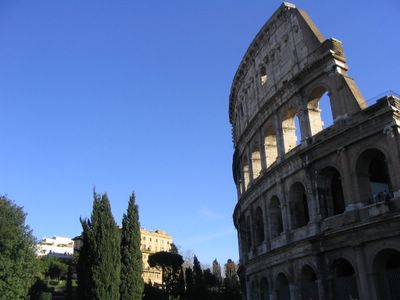
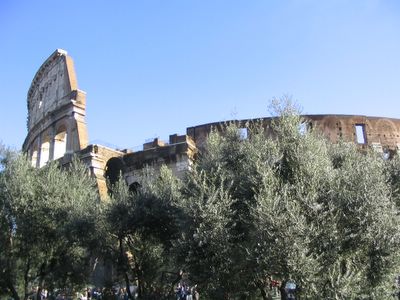


These last two pictures are taken from inside the Coliseum. By the way, know that this place is a real oven in summer: the stones are hot and there is almost no air ... It's hellish.
The triumphal arch in the photo above right ( and below) is the Arch of Constantine. It commemorates the victory of Constantine in the Milvian Bridge against Maxentius in 312. In the tradition, this battle marks the beginning of the Christianization of the Roman Empire.


We leave the terms to join the Tiber (" Tevere), the river of Rome.
By the way, quick glance over the Temple of Portunus (built between 100 and 80 BC. JC) Boarium forum. Much less known (and therefore ran less!) That the Forum Romanum, this place is very nice though.

The lover of old stones that I can not but be happy to move in this incredible concentration of temples, theaters and other buildings heirs of ancient times (which can artificially define the foundation of Rome , in 753 BC. in the fall of the last western emperor in 476 AD.).
And the least we can say is that there are around old buildings in Rome! It is immersed in the atmosphere before landing! Indeed, approach to Fiumicino airport, you fly over the ancient site of Ostia (pictured left ). Unfortunately I have not visited this site, very similar to Pompeii it seems (my trip to Pompeii in February 2006 on this page ).
In Rome, the largest concentration of ancient ruins located in the heart of the city. In my opinion, the best way to understand all these stones (!!), is arriving through Piazza Venezia.
From here begins the Via Fori Imperiali (Via dei Fori Imperiali).
Drawn in the 30's by Mussolini, whose destructive frenzy had evidently no limit, the broad avenue leading to the Coliseum, back a lot of ancient ruins.


The most famous of all the forums - as the largest and most historically important - is undoubtedly the Roman Forum, located at the end of Via dei Fori Imperiali, just before the Colosseum.


On the following pictures, the same place ... night. Magical.


And then at the end of Via dei Fori Imperiali, is "the" monument symbol of Rome, the Colosseum. Difficult not to be impressed by the monster stones, finished in 80 AD, and much higher than any "arena" of the Empire ...
Drawn in the 30's by Mussolini, whose destructive frenzy had evidently no limit, the broad avenue leading to the Coliseum, back a lot of ancient ruins.


Left, the Market of Trajan, the first "mall" of antiquity (completed in 113 AD) Here were envrion 150 stores combined! At right, a preview of the Forum of Augustus with the temple - easy to reconstruct mentally - from "Mars the Avenger" (completed in the year 2 BC. JC).
The most famous of all the forums - as the largest and most historically important - is undoubtedly the Roman Forum, located at the end of Via dei Fori Imperiali, just before the Colosseum.
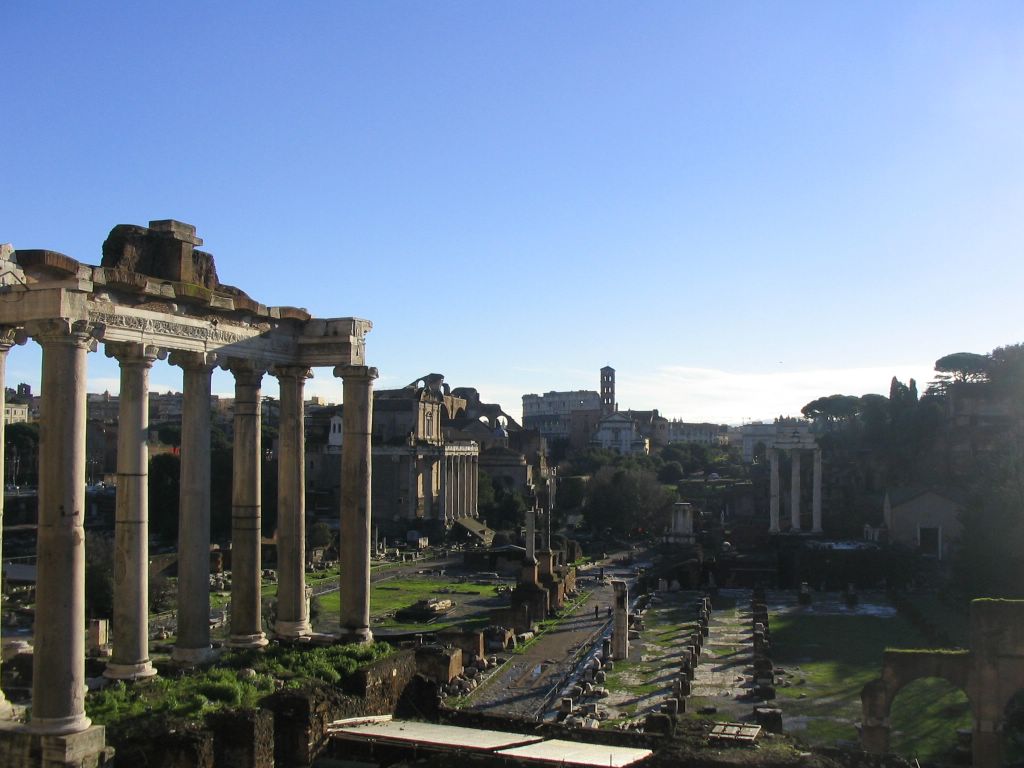
Look at this picture: there is hardly anyone! Extremely rare in this part of Rome, one of the most visited. So how to achieve this miracle? It is 9am on 1 January 2005 ...
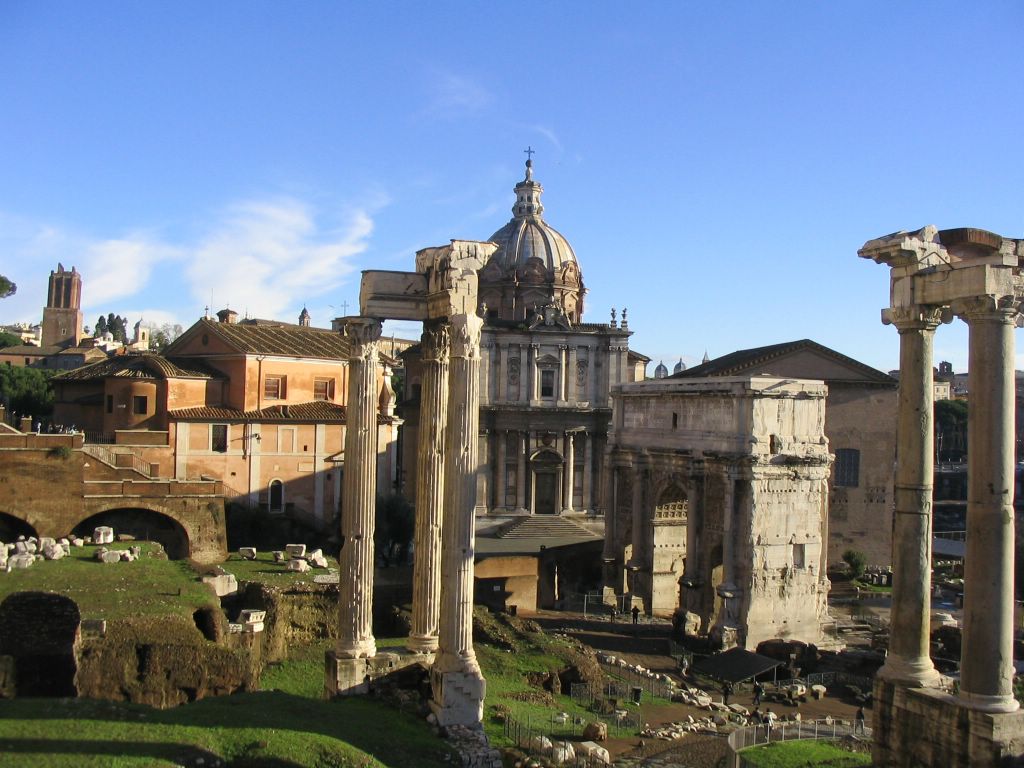


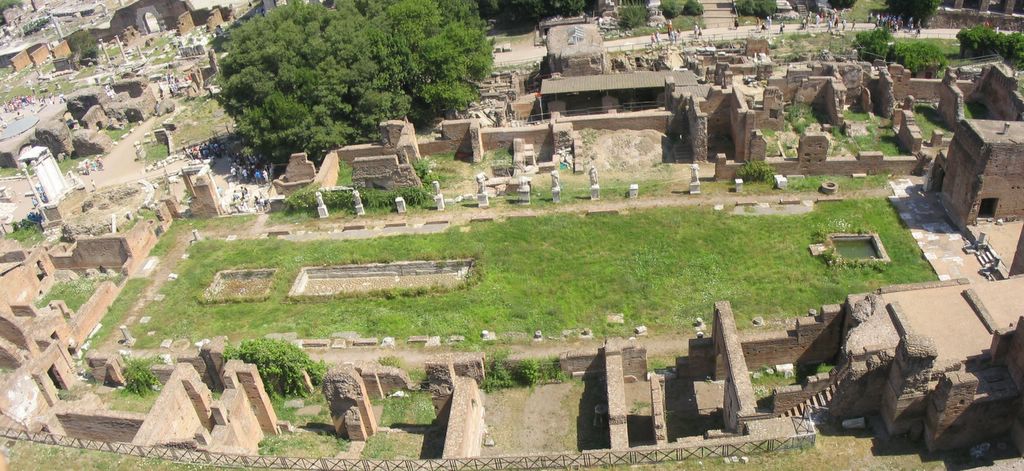

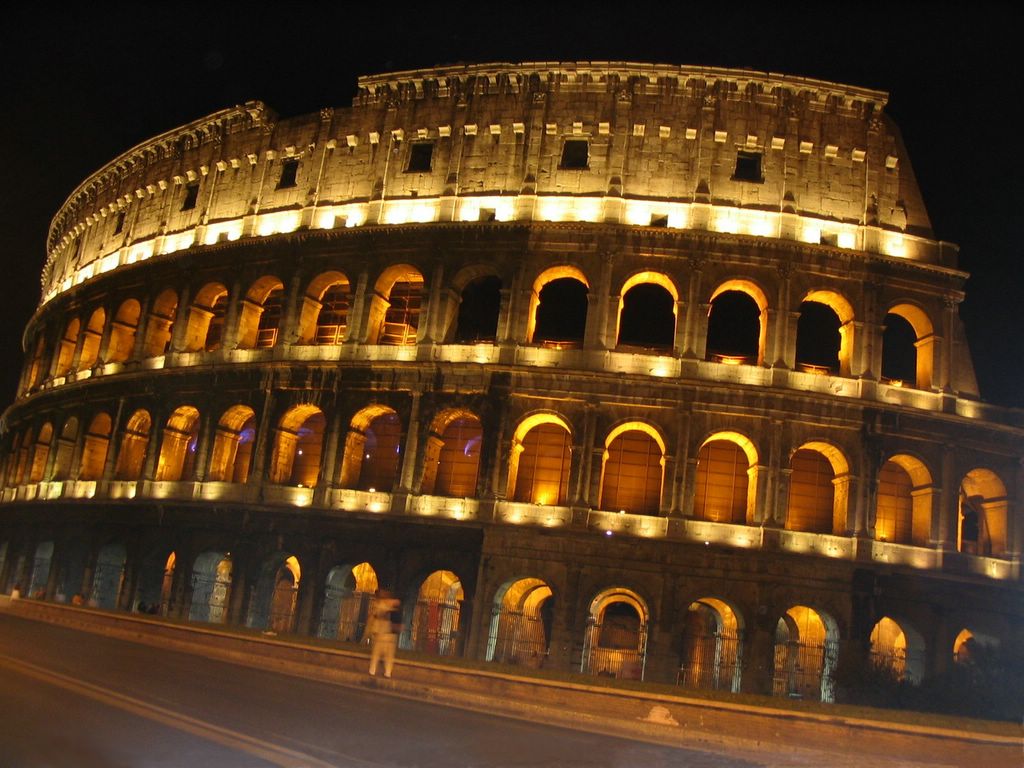
On the following pictures, the same place ... night. Magical.


And then at the end of Via dei Fori Imperiali, is "the" monument symbol of Rome, the Colosseum. Difficult not to be impressed by the monster stones, finished in 80 AD, and much higher than any "arena" of the Empire ...


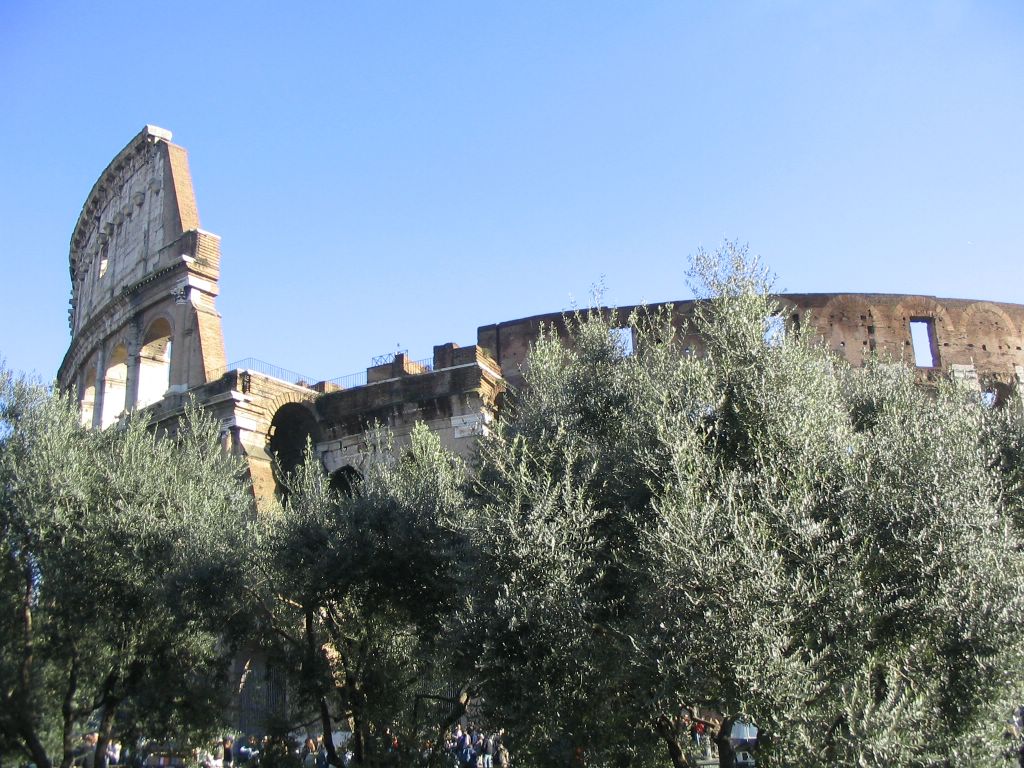


The triumphal arch in the photo above right ( and below) is the Arch of Constantine. It commemorates the victory of Constantine in the Milvian Bridge against Maxentius in 312. In the tradition, this battle marks the beginning of the Christianization of the Roman Empire.

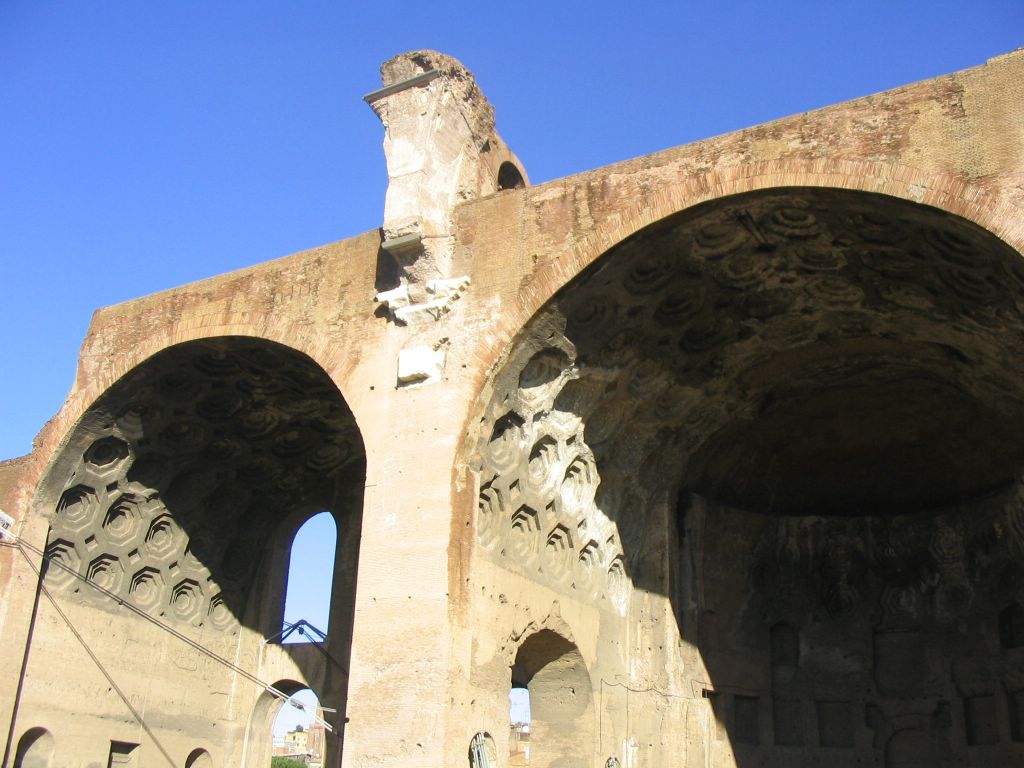
Not far from the Colosseum and Roman Forum, the ruins are so "great" that during my first stay in Rome, I took them for modern buildings! (Disused factories!). In fact it is indeed an ancient building (4th century AD): the Basilica of Maxentius and Constantine!

A little height now!
photos "aerial" Forum Romanum, and even the photo above left is taken from a hill, the Palatine.
 legendary site of Rome if any, since it at the foot of this hill would have been found the twins Romulus and Remus. Collected and reared by shepherds, is at its peak that Romulus chose to base the new city of Rome. The date for this event is April 21 founder 753 BC-AD. Even today, this date is celebrated as the anniversary ("the Nascita ") in Rome.
few centuries later, tourists have flocked to this land steeped in history. And rightly so. The place is simply .. timeless.
photos "aerial" Forum Romanum, and even the photo above left is taken from a hill, the Palatine.
 legendary site of Rome if any, since it at the foot of this hill would have been found the twins Romulus and Remus. Collected and reared by shepherds, is at its peak that Romulus chose to base the new city of Rome. The date for this event is April 21 founder 753 BC-AD. Even today, this date is celebrated as the anniversary ("the Nascita ") in Rome.
 few centuries later, tourists have flocked to this land steeped in history. And rightly so. The place is simply .. timeless.


Going down the Palatine, we come in a wide blank. Not really visible ruins here, but looking a little the general shape of the place, is easily recognized circuses on which stood the horse races, made famous in the movie Ben-Hur. And it is not wrong! It is here on the first circus of its kind to be built (by the Etruscans, originally in the 6th century BC. JC): The Circus Maximus ("Circus").


A little further on, up the Via Appia (attention, summer, heat is overwhelming at this point: no shadow!), are the terms of Caracalla. Again, the excess is put ... in some places, we even see bits of ceiling that have survived to us ... Incredible (it dates from the 3rd century AD!). Some pieces of pavement were also resisted time (And robbers). Result: one would almost believe!


By the way, quick glance over the Temple of Portunus (built between 100 and 80 BC. JC) Boarium forum. Much less known (and therefore ran less!) That the Forum Romanum, this place is very nice though.
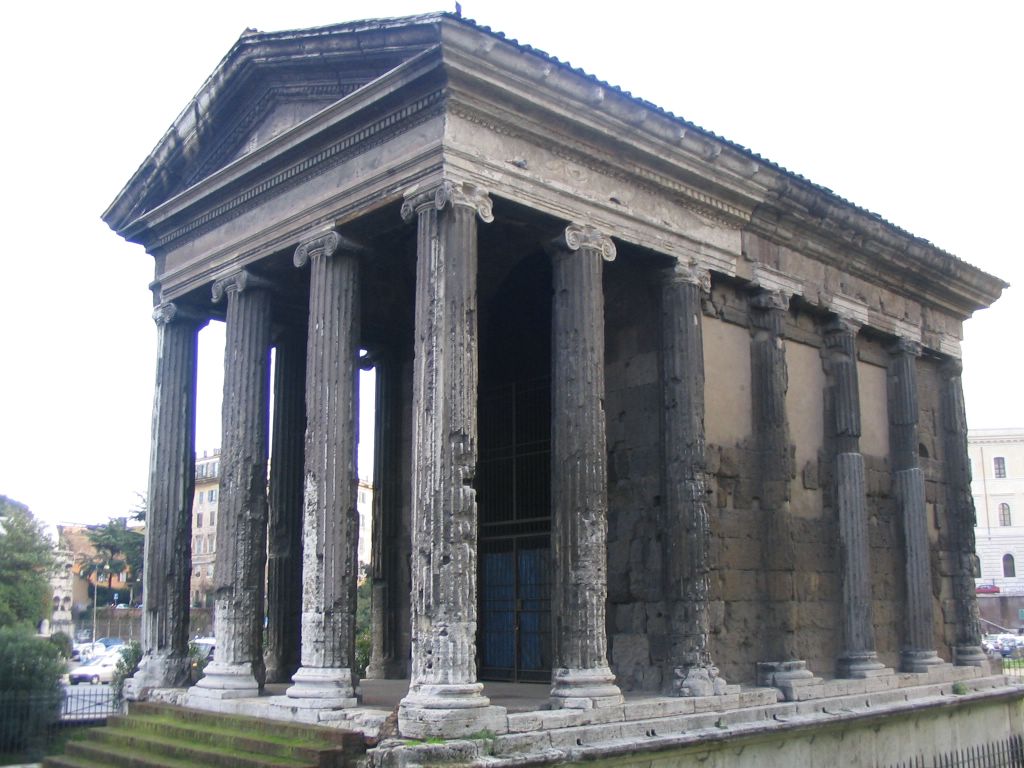
And then we arrive on the banks of the Tiber. The walk along the banks of the river, the allure of a stream in summer, is superb. There are not many people, because as in all major tourist destinations, tourists do not venture outside the "spot" tourist. The "adventure" will be rewarded, because some places are worth a look.


The circular building is the "Castel Sant'Angelo", also known by its ancient name: "Mausoleum of Hadrian."
Originally built (in 135 AD) as the tomb of Emperor Hadrian, it is the counterpart of that of Augustus, located nearby, across the Tiber (see just after ) . The general appearance of the two buildings is very similar.
Hadrian is considered one of the last emperors of the Golden Age of Rome, since it was under his reign that the empire is expanding. It focuses mostly pacified, organize, and strengthen the borders of the empire.
This building has seen many lives: fortress, prison, and especially "annex" of the Vatican (all close), where the Popes were taking refuge during the Reformation. The gossips say that they found even in peace ... women and children!
Below, a view from the top of Castel Sant'Angelo ( scan a photo taken in 2002 paper).

the other side of the Tiber, then, but in much poorer condition, the Mausoleum of Augustus, a character known for being the first emperor of Rome (d. 14 AD).


Continuing our walk along the Tiber, it falls on the Tiber Island ( below right) ...


... and above all a very nice rest of the ancient bridge.


The circular building is the "Castel Sant'Angelo", also known by its ancient name: "Mausoleum of Hadrian."
Originally built (in 135 AD) as the tomb of Emperor Hadrian, it is the counterpart of that of Augustus, located nearby, across the Tiber (see just after ) . The general appearance of the two buildings is very similar.
Hadrian is considered one of the last emperors of the Golden Age of Rome, since it was under his reign that the empire is expanding. It focuses mostly pacified, organize, and strengthen the borders of the empire.
This building has seen many lives: fortress, prison, and especially "annex" of the Vatican (all close), where the Popes were taking refuge during the Reformation. The gossips say that they found even in peace ... women and children!
Below, a view from the top of Castel Sant'Angelo ( scan a photo taken in 2002 paper).

the other side of the Tiber, then, but in much poorer condition, the Mausoleum of Augustus, a character known for being the first emperor of Rome (d. 14 AD).
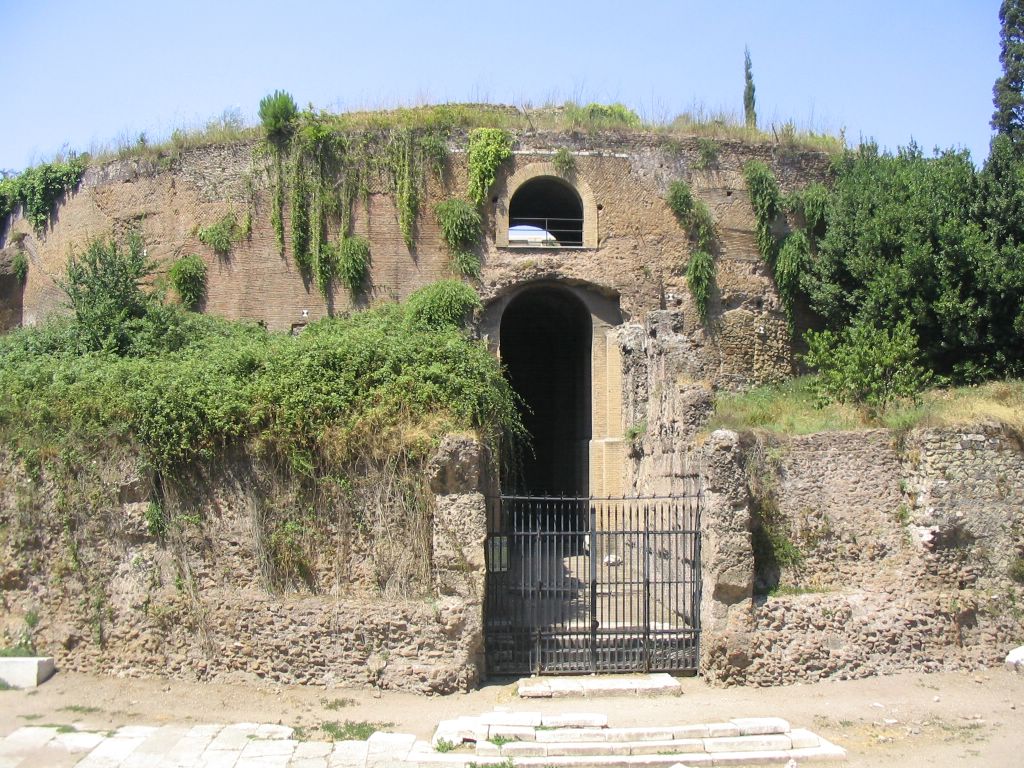
The mausoleum did not visit unfortunately, for reasons - obvious - safety. Damage. It must be said that the place has also gone through several lives: tomb, a fortress, garden ...
And in the years 1936-1938, it is retrieved by the fascist propaganda, Mussolini identifying himself humbly to the first emperor of Rome. It was then built all around the mausoleum, the Piazza Augusto Imperatore, "the incomparable style fascist ...

This style has unfortunately disfigured much of Italy during the fascist period. With the notable exception of Venice , I have not found a city that has not its share of buildings like this ...
And in the years 1936-1938, it is retrieved by the fascist propaganda, Mussolini identifying himself humbly to the first emperor of Rome. It was then built all around the mausoleum, the Piazza Augusto Imperatore, "the incomparable style fascist ...

This style has unfortunately disfigured much of Italy during the fascist period. With the notable exception of Venice , I have not found a city that has not its share of buildings like this ...


Continuing our walk along the Tiber, it falls on the Tiber Island ( below right) ...


... and above all a very nice rest of the ancient bridge.


Back downtown to finish this tour of ancient Rome, with my opinion the most beautiful monuments of Rome: the Pantheon.
is the only monument of the ancient Greco-Roman world that has survived virtually intact because it has ceased to be used since its construction. Originally
(27 av. BC, but rebuilt in 125 AD) temple of all gods ("Pan Theon ") of the ancient religion, it was transformed into a Christian church in the 7th century era. Even today, it's a church "active". For info, inside were buried Victor Emmanuel 2, Umbert 1 (the first two kings of united Italy) and the painter Raphael.
Its dome is the largest built in antiquity that has survived. It was the largest in Western Europe until 1436, the date of completion of the cathedral of Florence.


And finally a video that has honestly not much interest, but hey, it's to share the calm that reigned on this site.
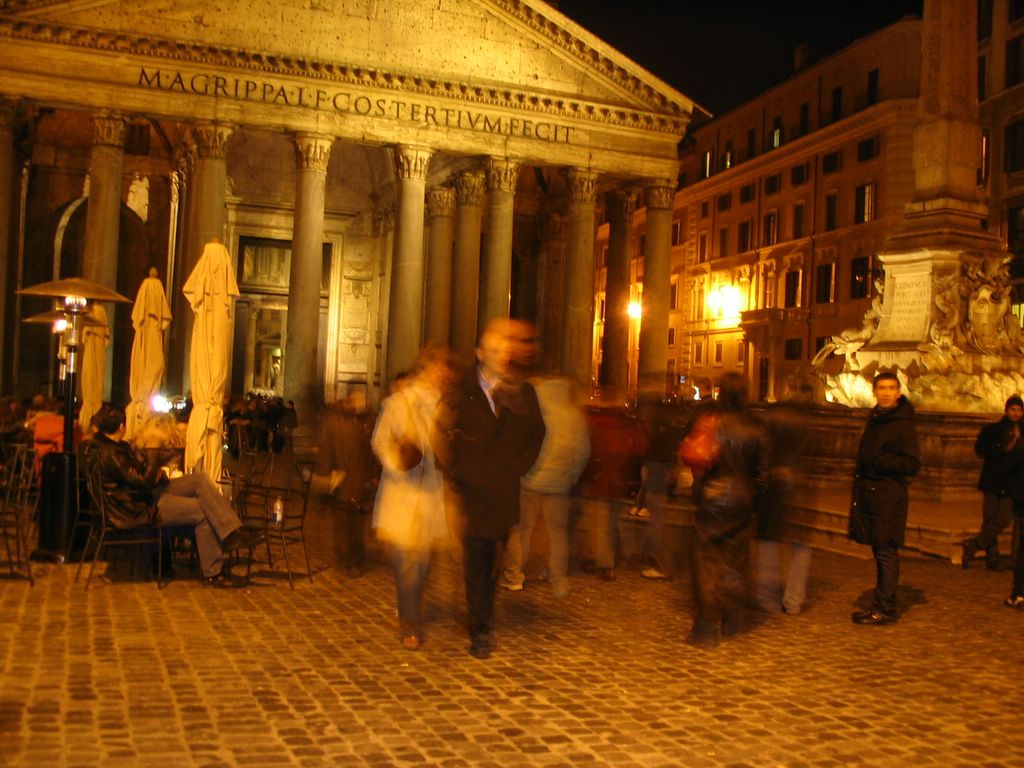
is the only monument of the ancient Greco-Roman world that has survived virtually intact because it has ceased to be used since its construction. Originally
(27 av. BC, but rebuilt in 125 AD) temple of all gods ("Pan Theon ") of the ancient religion, it was transformed into a Christian church in the 7th century era. Even today, it's a church "active". For info, inside were buried Victor Emmanuel 2, Umbert 1 (the first two kings of united Italy) and the painter Raphael.
Its dome is the largest built in antiquity that has survived. It was the largest in Western Europe until 1436, the date of completion of the cathedral of Florence.
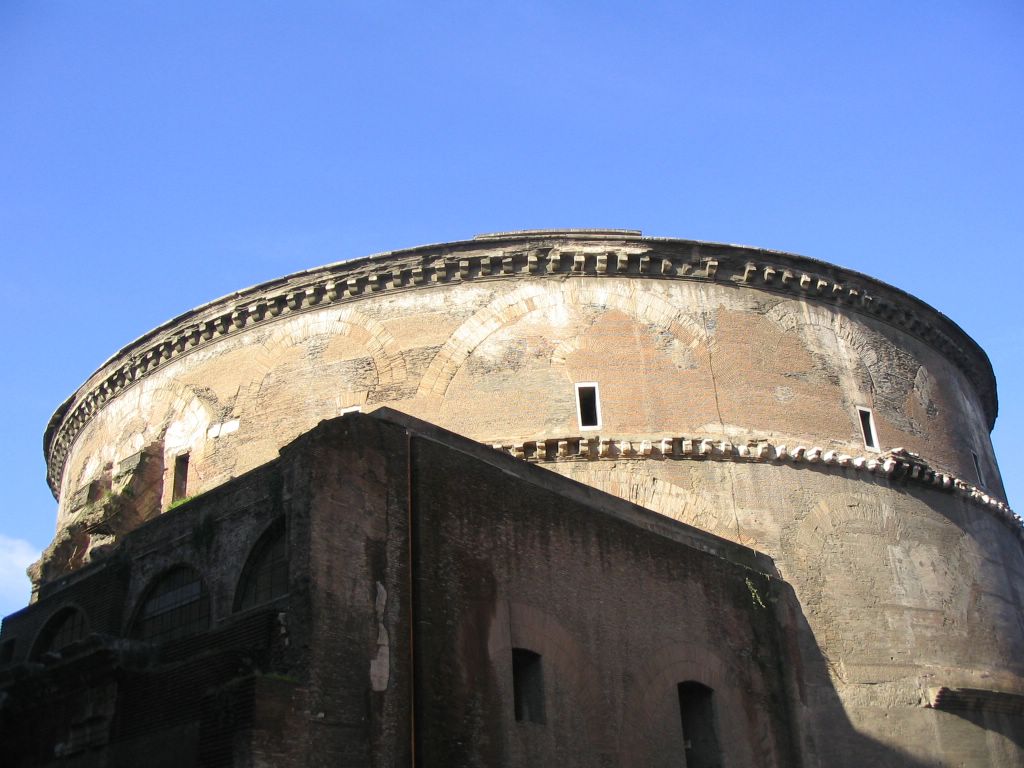

And nothing to spoil the fun, the place built in front of the Pantheon (the square of the Rotonda) is beautiful.


much for downtown ... But the surroundings of Rome offered lots of testimonies of antiquity. Thus, Tivoli (fifty kilometers from Rome), there is the splendid villa of Hadrian, perched in the hills. It is really a kind of Pompeii locally since conservation status and extent of the site.


And finally a video that has honestly not much interest, but hey, it's to share the calm that reigned on this site.
That's the part of ancient Rome. You'll understand that this is what I prefer. But hey, can not be exhaustive ... And even though I wish he would take a year to visit everything!


0 comments:
Post a Comment